If your North Port home feels sticky even though the air conditioner is running, the thermostat may be telling only part of the story. Your AC needs to remove both heat and moisture. When it lowers the temperature without removing enough water vapor, rooms can feel cool but clammy.
Southwest Florida’s humid climate makes that balance especially important. Understanding how your system controls moisture, and what can interfere with that process, can help you separate a simple thermostat adjustment from a problem that needs professional diagnosis.
How Your Air Conditioner Removes Indoor Moisture
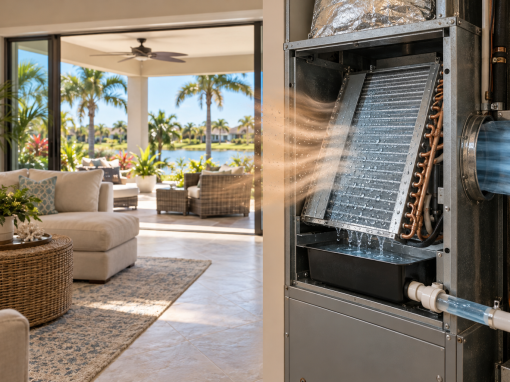
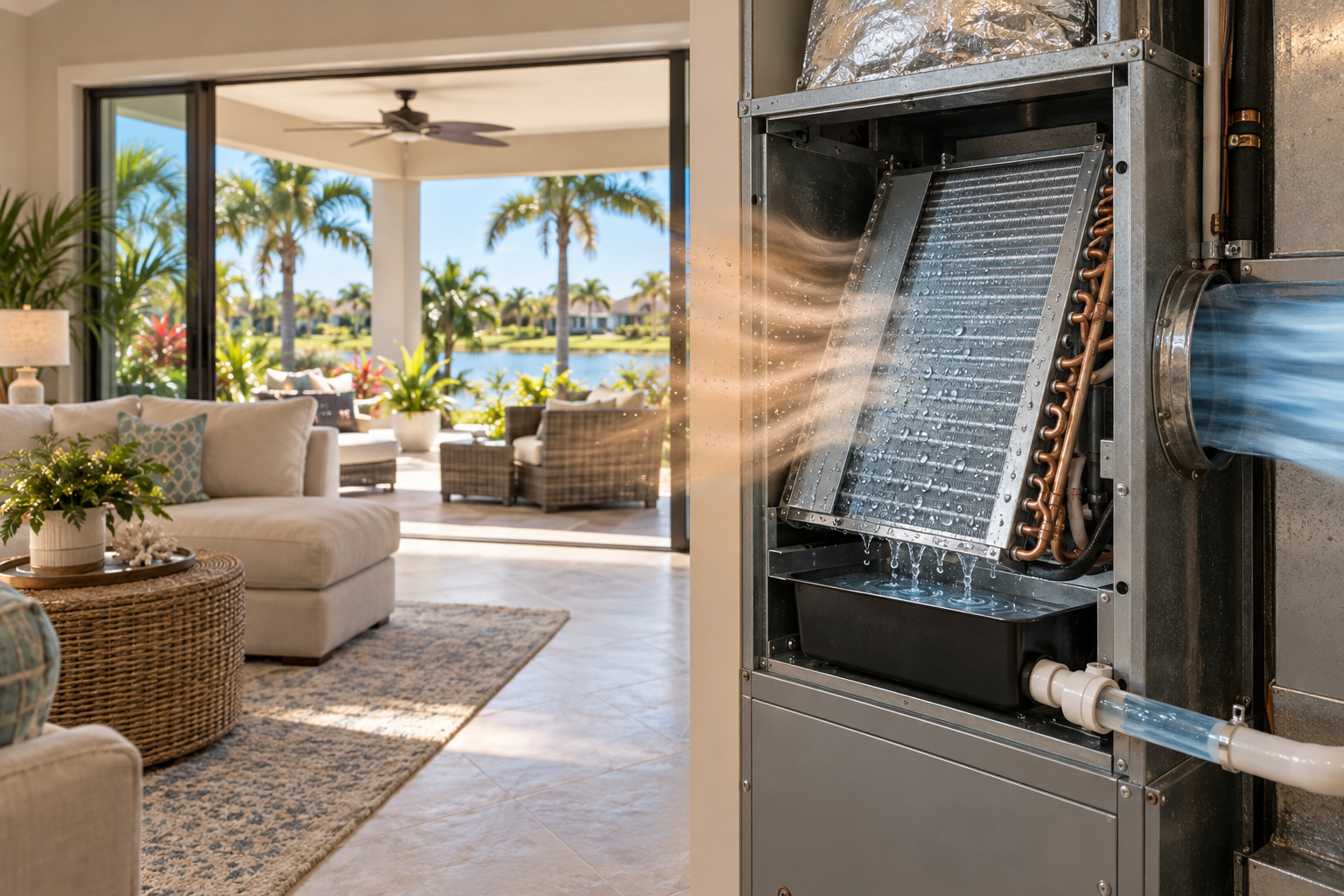
Your air conditioner pulls warm indoor air across a cold evaporator coil. As the air cools below its dew point, some of its moisture condenses on the coil, much like water droplets forming on a cold glass. That water collects in a drain pan and flows out through the condensate drain line.
This process takes adequate operating time and properly balanced airflow. Reaching the thermostat’s temperature setting does not necessarily mean the system has removed enough moisture. During rainy weather or milder, humid periods in North Port, your home may need less cooling while still having a substantial moisture load.
Measure Humidity Instead of Relying Only on Temperature
A small digital hygrometer can help you determine whether excess moisture is contributing to your discomfort. A practical indoor relative humidity target is generally between 30% and 50%, although maintaining the lower end may be difficult in Southwest Florida. Readings that consistently exceed 60% deserve attention because prolonged damp conditions can support mold growth and contribute to musty odors.
Place the hygrometer in a regularly occupied room, away from supply vents, direct sunlight, bathrooms, and cooking areas. Check it at different times over several days and note the thermostat setting. A pattern of elevated humidity is more useful for troubleshooting than one reading immediately after a shower or while cooking.

Common Reasons Cooling Does Not Solve the Sticky Feeling
Persistent indoor humidity usually means moisture is entering or being generated faster than the AC can remove it, or the system is not providing effective dehumidification. Sometimes several conditions overlap, such as frequent door openings combined with short cooling cycles.
Before assuming the equipment needs replacement, look at how it operates and how moisture moves through the home. Thermostat settings, equipment sizing, and outdoor air leakage can all affect comfort, but each requires a different solution.
The Thermostat Fan Is Set to “On”
On many conventional central AC systems, the “On” fan setting keeps the indoor blower running even when the compressor stops. Air moving over the wet evaporator coil between cooling cycles can evaporate some collected moisture back into the home. This can reduce the system’s net moisture removal.
For these systems, “Auto” is generally the better starting point because it allows the blower to cycle with cooling demand. Some variable-speed systems use manufacturer-specific airflow and humidity settings, so check the operating instructions before changing advanced controls.
The System Runs in Short Bursts
An oversized air conditioner can cool a home quickly and shut off before removing enough moisture. Bigger is not automatically better, particularly in humid areas such as North Port and Port Charlotte. Proper sizing depends on a load calculation that considers insulation, windows, air leakage, and other building characteristics, not square footage alone.
Frequent short cycles can also result from thermostat placement, control problems, or equipment faults. Note whether the system repeatedly starts and stops after only brief runs. That observation can help a technician investigate the cause without jumping straight to a replacement recommendation.
Humid Outdoor Air Keeps Getting Inside
Gaps around doors, leaky attic access openings, and other air leaks can introduce humid outdoor air. Leaks in return ductwork located outside the conditioned space can also draw hot, moisture-laden air into the system. In Southwest Florida, that added moisture can be significant even when the house feels reasonably cool.
Check accessible weatherstripping and make sure windows and exterior doors close securely. Use bathroom and kitchen exhaust fans as needed to remove moisture at its source, but avoid running them unnecessarily for long periods because exhaust airflow requires replacement air. Suspected duct leaks need a closer inspection, especially when humidity problems accompany uneven temperatures or unusually long cooling cycles.
Maintenance Problems That Can Interfere With Moisture Removal
Even correctly sized equipment can struggle with humidity when airflow, coil condition, or drainage is not working as intended. These issues do not automatically mean you need a new air conditioner, but they do require identifying the underlying cause rather than simply lowering the thermostat.
A Dirty Filter or Evaporator Coil
A clogged air filter restricts airflow across the evaporator coil. Severe restrictions can cause the coil to freeze, reducing cooling performance and disrupting normal moisture removal. Dirt on the coil can also interfere with heat transfer and airflow.
Inspect the filter regularly and replace it according to the equipment and filter manufacturer’s instructions. Homes with pets, frequent visitors, or nearby construction may need more frequent checks. Use the recommended filter size and type, since a more restrictive filter is not automatically better for your system.
If you see ice on refrigerant tubing or the indoor unit, stop cooling operation and arrange professional service. Do not chip away ice or continue lowering the temperature setting. Restricted airflow and refrigerant problems can produce similar symptoms, so ice alone does not identify the cause.
Incorrect Blower Settings or Refrigerant Problems
Airflow must match the equipment’s design and operating conditions. Air moving too quickly across the evaporator coil can reduce moisture removal, while airflow that is too low can create performance problems or freezing. A technician can check blower settings, duct restrictions, and static pressure instead of making adjustments by guesswork.

Refrigerant problems can also prevent the system from performing correctly. Refrigerant is not normally consumed during operation, so a low charge calls for investigation of a possible leak or an incorrect previous charge. Adding refrigerant without addressing the cause is not a lasting solution.
A Condensate Drain That Is Not Working Properly
A blocked drain can cause water to back up, overflow, or activate a safety switch that shuts the system down. It does not necessarily explain every high humidity reading, but interrupted cooling and standing water can contribute to comfort problems and water damage.
Watch for water around the indoor air handler, repeated safety-switch shutdowns, or damp areas near the equipment. If you find leaking water, stop operating the affected system and have the drainage problem checked. Avoid opening equipment panels or using harsh drain chemicals unless the manufacturer specifically allows them.
Everyday Moisture Sources That Add to the Problem
Some humidity comes from normal household activities rather than an AC malfunction. In a North Port home, showers, cooking, laundry, and outdoor air entering through frequently opened doors can combine to create a moisture load the system struggles to manage.
Bathrooms, Cooking, and Laundry
Use a bathroom exhaust fan during showers and afterward until lingering moisture clears. Make sure the fan vents outdoors, not into the attic. A kitchen hood that exhausts outdoors can remove cooking moisture, while a recirculating hood generally does not remove water vapor.
Check that a conventional vented clothes dryer has an intact duct that terminates outdoors. Drying laundry indoors and leaving bathroom surfaces wet can also increase indoor moisture. If humidity spikes after specific activities and then drops, source control may help more than a thermostat adjustment.

Water Leaks and Damp Building Materials
Plumbing leaks, roof leaks, and water intrusion around windows can keep indoor humidity elevated even when the AC is functioning normally. A persistent musty smell, staining, peeling finishes, or a damp area limited to one room warrants investigation.
Air conditioning cannot correct an ongoing water leak. Find and repair the moisture source, then address affected materials as appropriate. Persistent visible growth or significant water damage may require a qualified remediation professional in addition to HVAC service.
Should You Lower the Thermostat or Use a Dehumidifier?
Lowering the thermostat may extend cooling cycles and remove more moisture, but it can also leave the home uncomfortably cold and increase electricity use. It is not a reliable substitute for correcting short cycling, air leakage, or an equipment fault. Cooling the air further can also raise relative humidity if enough moisture is not removed.
This is particularly noticeable during rainy or mild weather in coastal communities such as Venice and Englewood. The home may reach its temperature setting quickly while moisture continues entering from outside and daily activities.
When Supplemental Dehumidification Makes Sense
A dehumidifier can help when humidity remains high despite a properly functioning AC system and reasonable control of moisture sources. A portable unit may suit a single problem area, while a whole-home dehumidifier can address a broader moisture load. Neither should be used to conceal a water leak or avoid necessary HVAC repairs.
Portable units release heat into the room and require regular cleaning and reliable water disposal. Whole-home equipment needs appropriate sizing, duct connections, drainage, and controls. A professional assessment can determine whether supplemental dehumidification is justified or whether an existing system adjustment would solve the problem.

What to Check Before Requesting an HVAC Diagnosis
A few observations can make troubleshooting more productive. Record indoor temperature and humidity over several days, note whether the thermostat fan is set to “Auto,” and check the filter.
Pay attention to when the problem is worst. Humidity that rises after showers suggests a different starting point than humidity that stays high all day.
What a Thorough Professional Assessment Should Include
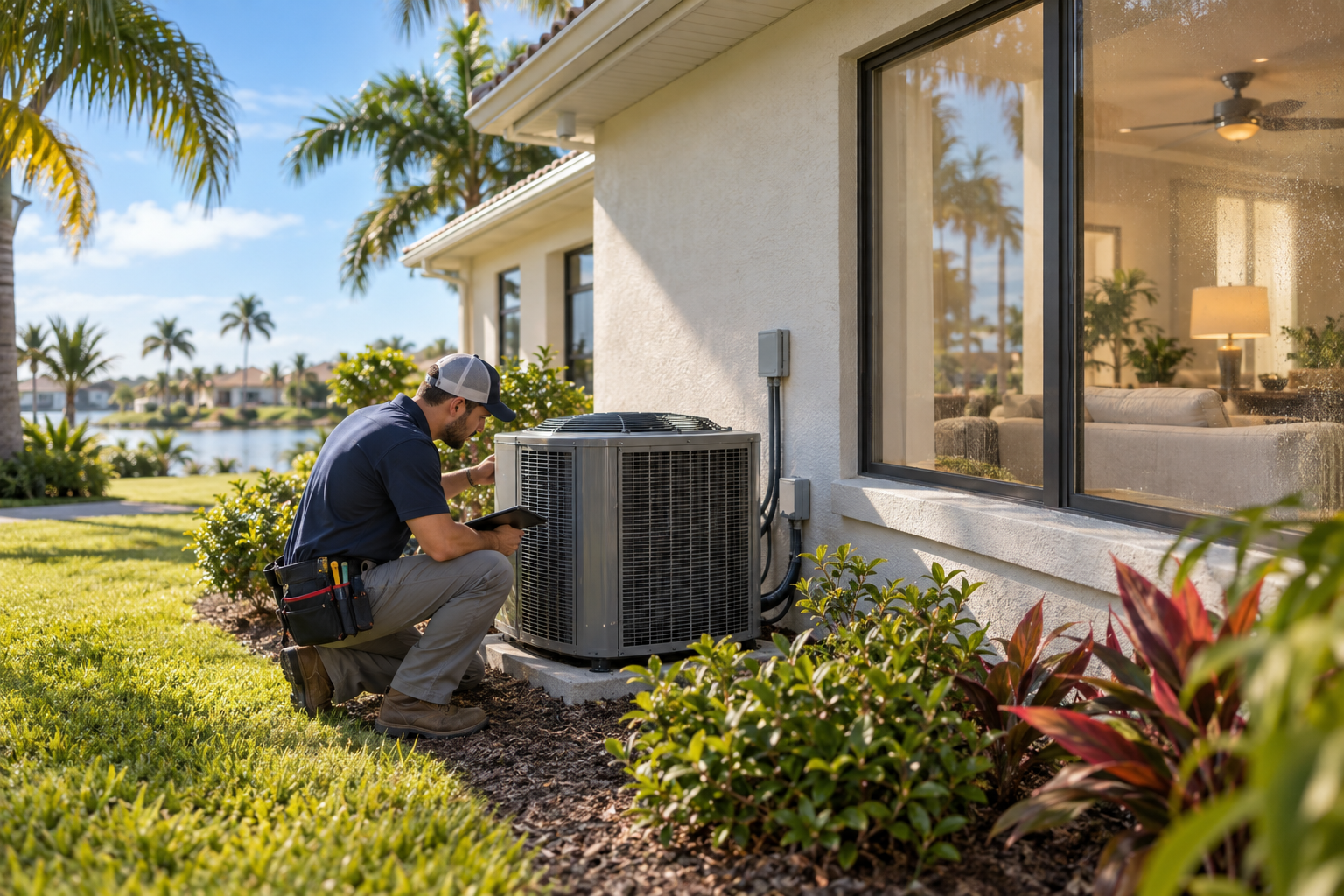
A humidity-focused evaluation should consider both the HVAC equipment and the home. Depending on the symptoms, a technician may inspect the evaporator coil and drain, measure airflow and refrigerant performance, review thermostat settings, and check accessible ductwork for leakage or damage.
If equipment sizing is in question, a load calculation provides a better basis for decisions than matching the old unit’s capacity. For homes in North Port, Sarasota, or Punta Gorda, that assessment should account for local outdoor conditions, the building envelope, and moisture loads, not just peak cooling demand.
The findings should guide the solution. A maintenance correction, duct repair, control adjustment, or moisture-source repair may be enough. Replacement deserves consideration when documented sizing problems, equipment condition, repair costs, and available humidity-control features make it the more practical long-term choice.
Is your North Port home staying clammy even when the air feels cool?
Contact Foundation Air for help identifying what may be affecting your AC’s moisture removal.