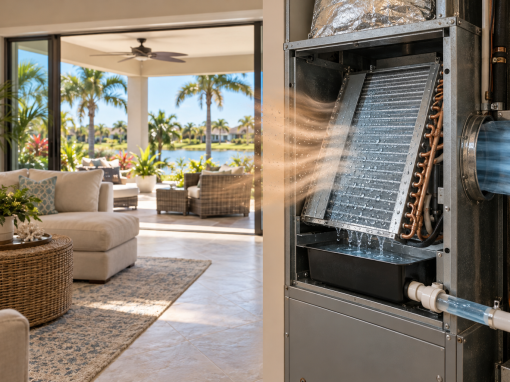

Ice on an air conditioner can seem strange during a hot Southwest Florida afternoon, but frozen AC coils are a common sign that something is interfering with normal cooling. You might notice weak airflow, warm air coming from the vents, water around the indoor unit, or frost on the larger refrigerant line near the outdoor equipment.
For homeowners in North Port, Port Charlotte, Venice, and surrounding communities, the important first step is to stop running the system in cooling mode. Ice will not fix itself while the AC continues trying to cool, and continued operation can put additional strain on the equipment. Understanding why a coil freezes helps you separate simple checks from problems that need professional AC repair.
Why an Air Conditioner Can Freeze in Florida Heat
Your indoor evaporator coil absorbs heat from household air as refrigerant flows through it. The blower moves warm air across the coil, and moisture from that air condenses on its cold surface before draining away. This condensation is normal, especially in the humid conditions common throughout Sarasota and Charlotte counties.
Freezing happens when the coil surface drops below freezing and moisture begins turning into ice. Two major causes are insufficient airflow across the coil and refrigerant conditions that make the coil abnormally cold. Once ice forms, it can restrict airflow further, allowing the buildup to grow and reducing the system’s ability to cool your home.
High Humidity Adds Moisture, but It Is Not Usually the Root Cause
Southwest Florida’s humidity gives a cold coil plenty of moisture to collect. However, a properly installed, correctly charged, and well-maintained air conditioner should handle that moisture without freezing. Ice should not be dismissed as a normal result of summer weather or long cooling cycles.
In places such as Englewood and Punta Gorda, extended cooling seasons mean filters, coils, and blower components need consistent attention. A developing airflow restriction may become noticeable during periods of heavy use, even though the underlying problem has been building for weeks.
Common Problems Behind a Frozen Evaporator Coil
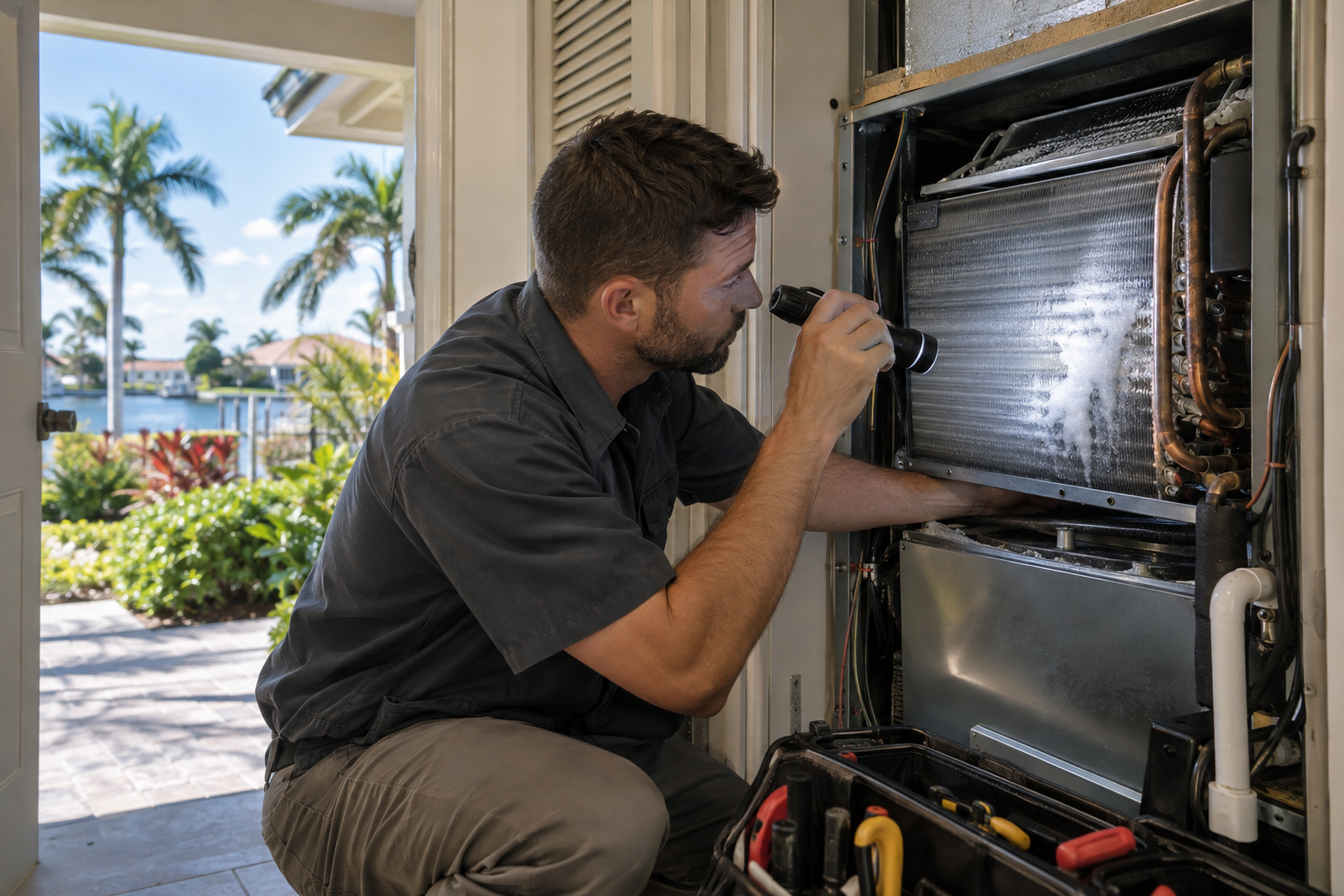
A frozen coil is a symptom, not a diagnosis. Several faults can produce similar warning signs, so visible ice alone does not tell you whether the repair will be straightforward or more involved. Checking accessible airflow components is a useful starting point, but refrigerant and electrical testing should be left to a qualified HVAC technician.
Before inspecting a filter or checking vents, turn cooling off at the thermostat. Do not remove equipment panels, chip away ice, or use a hair dryer to speed up thawing. Ice can hide delicate coil fins and tubing, and water near electrical components creates additional hazards.
A Dirty Filter or Restricted Airflow
A heavily loaded air filter can reduce the amount of warm air reaching the evaporator coil. Closed supply registers, blocked return grilles, dirty indoor coils, and restricted ductwork can also limit airflow. With too little heat moving across the coil, its temperature can fall low enough for condensation to freeze.
Check whether your filter is visibly dirty and replace it if needed, using the size and type recommended for your system. Keep return grilles clear of furniture and make sure supply vents are open and unobstructed. A filter with a higher filtration rating is not automatically a better choice if the system cannot accommodate its airflow resistance.
Low Refrigerant From a Leak or Incorrect Charge
Low refrigerant can lower evaporator pressure and cause part of the coil to become cold enough to freeze. Refrigerant circulates in a sealed system and is not normally consumed during operation. A low charge may indicate a leak or an incorrect initial charge, rather than a routine need for a refill.
Adding refrigerant without identifying the underlying issue can leave the problem unresolved. A technician should evaluate the system after the coil has thawed, verify airflow, and take appropriate measurements before deciding whether leak testing or a charge correction is necessary.

A Blower Problem or a Dirty Indoor Coil
A failing blower motor, a dirty blower wheel, or a control problem can reduce air movement even when the filter is clean. Dust buildup on the evaporator coil can also interfere with airflow and heat transfer. These issues may cause weak airflow throughout the home, unusual operating sounds, or repeated freezing after the system thaws.
Cleaning or repairing these components generally requires access inside the air handler and appropriate electrical precautions. If airflow remains weak with a clean filter and unobstructed vents, leave cooling off rather than repeatedly restarting the system to see whether the ice returns.
What to Do When You Find Ice on Your AC
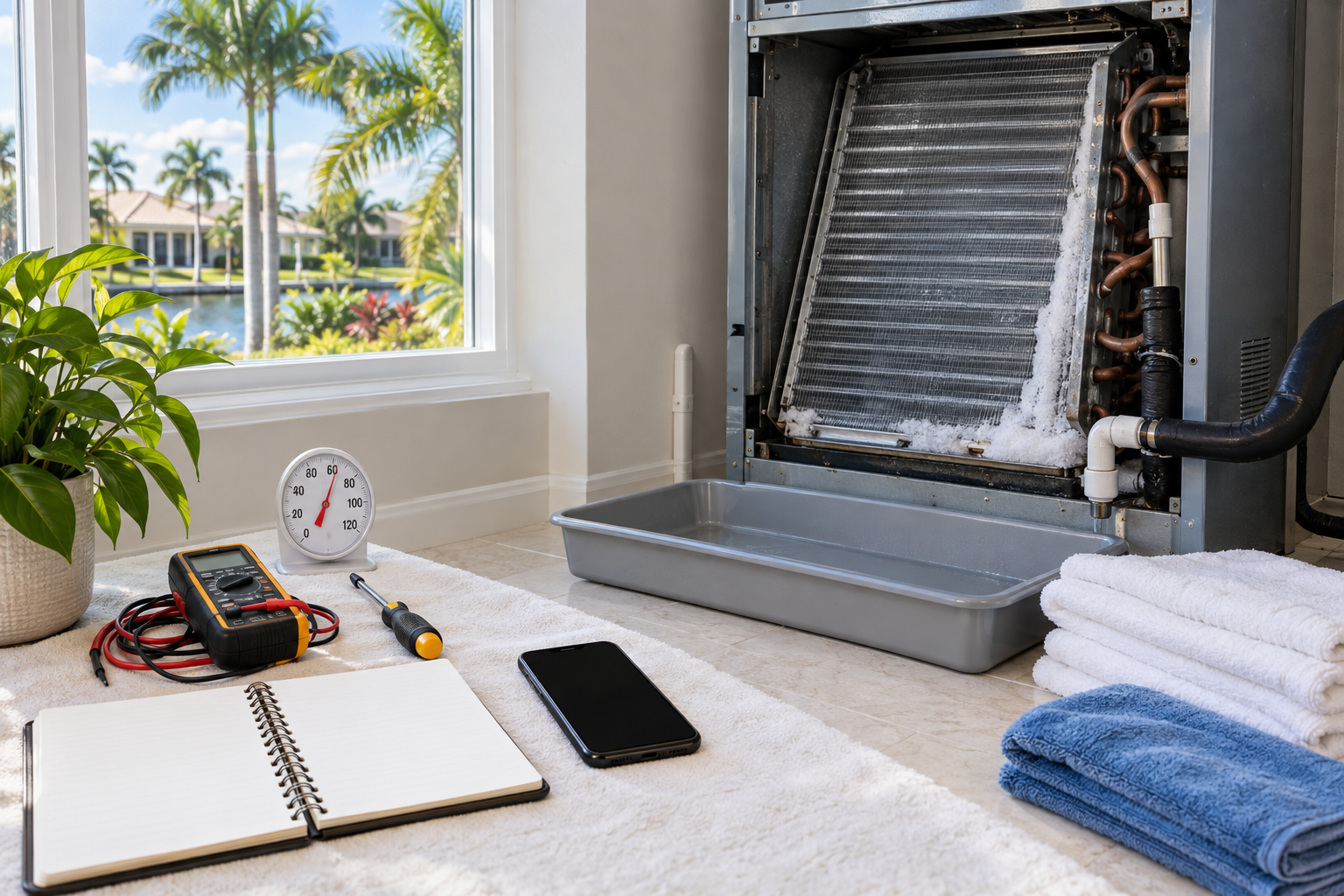
The immediate goal is to stop ice from building, allow the system to thaw safely, and protect nearby surfaces from meltwater. Lowering the thermostat will not speed up recovery. It only extends the call for cooling while the underlying problem remains.
Turn Cooling Off and Check for Water
Set the thermostat’s cooling mode to off. If water is leaking from the air handler, approaching electrical components, or soaking a ceiling, leave the equipment off and arrange professional service. Do not touch wet electrical equipment or enter an attic with wet or damaged walking surfaces.
As ice melts, it can overwhelm the drain pan or reveal an existing condensate drainage problem. From a safe, accessible location, watch for water around the unit and protect nearby belongings. A clogged drain does not usually explain a frozen coil by itself, but it can make the thawing process more damaging.
Use Fan-Only Operation Only When It Is Safe
If the blower operates normally and there is no water near electrical components, setting the thermostat fan to “On” while cooling remains off can help move room-temperature air across the coil. This may help the ice melt. If the blower is not moving air, makes unusual noises, or the unit is leaking significantly, leave the system off instead.
Thawing can take several hours, and heavy ice buildup may take longer. Frost disappearing from an exposed refrigerant line does not prove that the entire indoor coil is clear. Avoid opening panels to check it, and never use hot water, a heat gun, or tools to remove ice.
Be Cautious About Restarting Cooling
If a visibly clogged filter was the apparent cause, you have replaced it correctly, and the system has fully thawed without drainage problems, a cautious restart may be reasonable.
Watch for weak airflow, renewed frost, unusual sounds, or water leakage. If any of these return, shut cooling off and have the system evaluated. Repeatedly thawing and restarting an AC is not a repair, even if it cools briefly between freeze-ups.
When a Frozen AC Needs Prompt Professional Attention
A frozen coil warrants service when the cause is unclear, airflow remains weak, or ice returns after a filter change. More urgent attention is appropriate when water threatens ceilings or electrical equipment, the blower stops working, a breaker trips repeatedly, or you notice a burning smell.
Loss of cooling also creates a separate concern during Southwest Florida’s extreme heat. If indoor temperatures become unsafe, especially for older adults, infants, or people with health conditions, move to an air-conditioned location while repairs are arranged.
What to Tell the Technician
Useful details include when cooling weakened, where you saw ice, whether airflow changed, and when the filter was last replaced. Mention recent thermostat changes, ductwork, equipment service, or a newly installed filter with a different filtration rating.
Also explain whether this is the first freeze-up or a recurring problem. For example, an AC that freezes shortly after each restart may require a different diagnostic approach than one that develops ice only after many hours of operation.
How a Technician Diagnoses a Frozen Coil
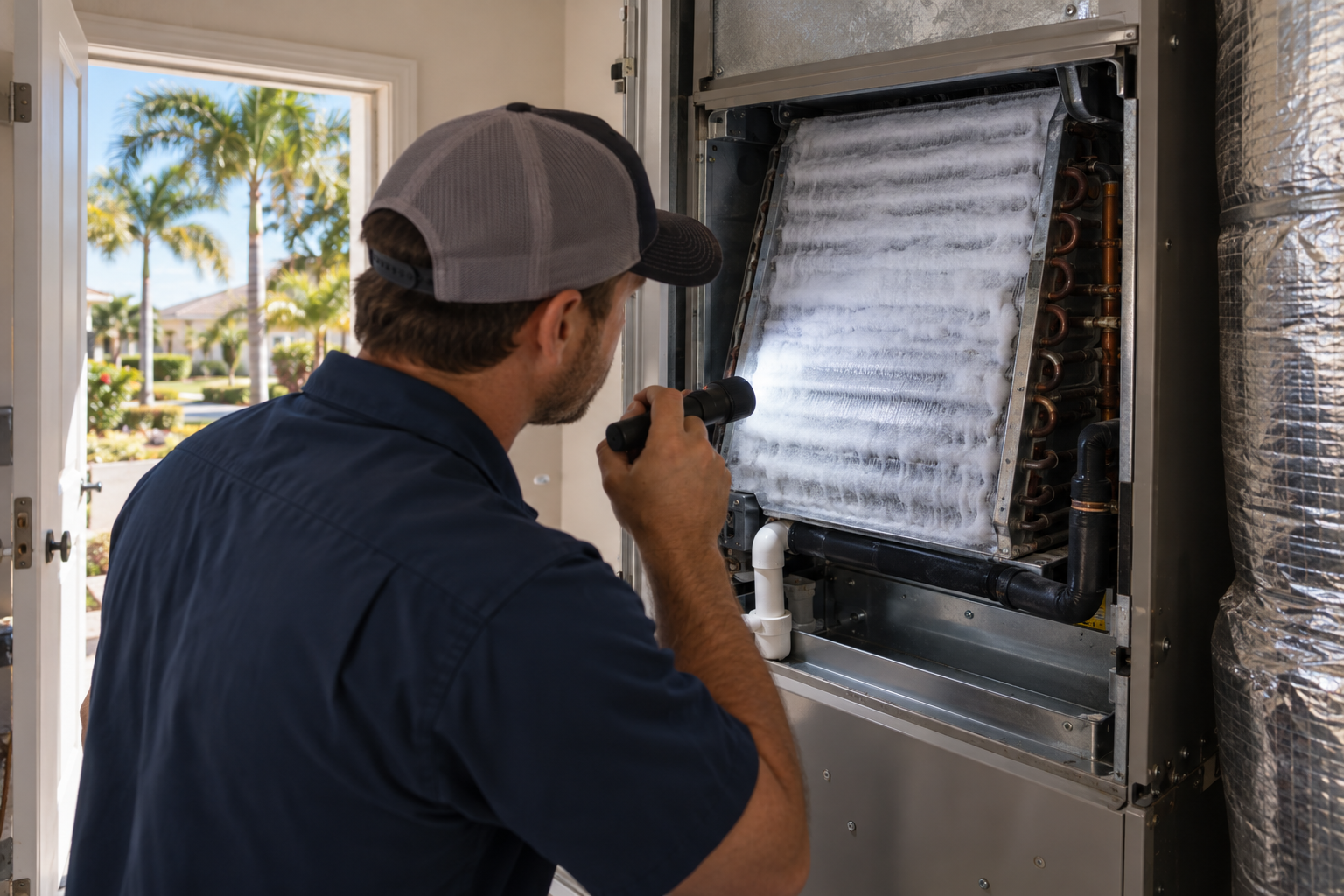
A reliable diagnosis goes beyond replacing the filter or adding refrigerant. The coil generally needs to be fully thawed before operating measurements are meaningful, because ice changes airflow and refrigerant conditions.
The evaluation typically includes filter suitability, coil and blower cleanliness, blower operation, and restrictions in the return and supply air paths. Measuring static pressure can help identify excessive resistance in the air distribution system.
A restricted metering device or another refrigerant flow problem can sometimes produce symptoms similar to a low charge. That is why ice, a single pressure reading, or the temperature of one pipe is not enough to justify adding refrigerant.
Repair Versus Replacement Depends on the Findings
A frozen evaporator coil does not automatically mean you need a new air conditioner. A filter restriction, blower repair, or cleaning may resolve the issue when the rest of the equipment is in sound condition.
For older equipment with repeated leaks or multiple major problems, comparing repair and replacement costs can be worthwhile. The decision should account for reliability, remaining service life, efficiency, and your budget, not simply the presence of ice.
How to Reduce the Risk of Another Freeze-Up
In North Port and surrounding communities, long cooling seasons make routine airflow checks especially useful. Inspect the filter monthly during heavy use and replace it according to its condition, the manufacturer’s guidance, and household factors such as pets or renovation dust.

Keep supply registers open and return grilles unobstructed. Closing vents in unused rooms can increase system resistance rather than deliver the intended savings. If one room stays uncomfortable, have the airflow or duct design evaluated instead of trying to rebalance the entire home by closing multiple registers.
Preventive HVAC maintenance should include attention to the evaporator coil, blower, condensate drainage, electrical components, and overall cooling performance. Report gradual changes such as longer cooling cycles or declining airflow before they become a complete loss of cooling.
For everyday operation, the thermostat’s “Auto” fan setting is generally preferable in humid weather. Continuous fan operation between cooling cycles can re-evaporate moisture left on the coil and raise indoor humidity.
Treat Ice as a Warning, Not a Normal Cooling Condition
A healthy air conditioner should cool and remove moisture without building ice. When freezing occurs, turn cooling off, check only safely accessible items, and allow the equipment to thaw without forcing the process.
Addressing the actual cause protects more than cooling performance. It also reduces the risk of repeat shutdowns, meltwater damage, and unnecessary strain during the months when Southwest Florida homes depend most on their air conditioning.
Noticing ice on your AC or weak airflow in your Southwest Florida home?
Contact Foundation Air for help identifying the cause and understanding your repair options.