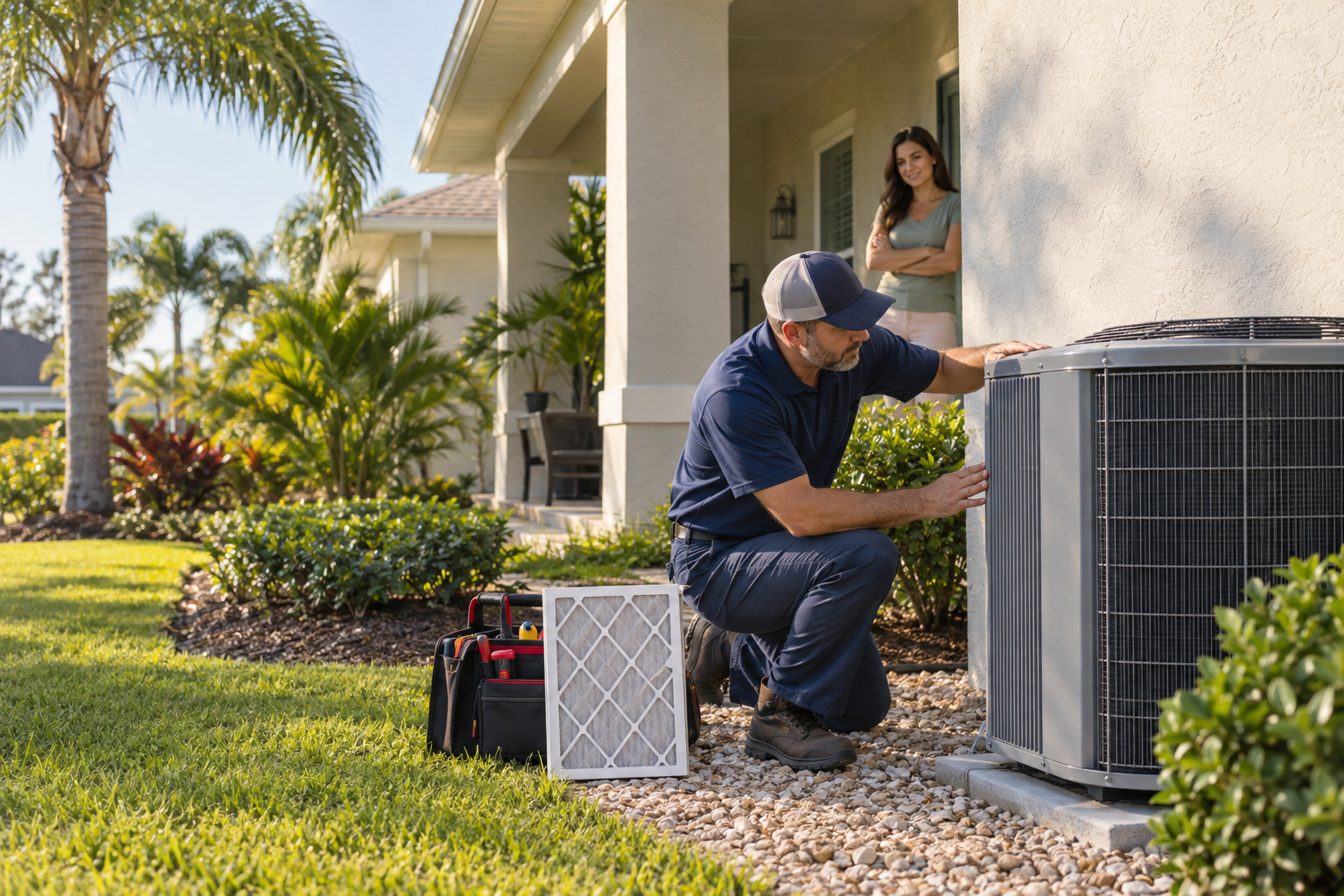
When your air conditioner stops keeping up with North Port’s heat, deciding whether to repair it or replace it can feel urgent. A repair may restore dependable cooling without a major investment, while replacement may make more sense when breakdowns, high operating costs, and declining comfort become recurring problems.
The right choice depends on more than the system’s age or the latest repair estimate. For homeowners in North Port and nearby communities such as Port Charlotte, Venice, and Englewood, Southwest Florida’s long cooling season makes equipment condition, humidity control, and installation quality especially important.
Start With the Cause of the Cooling Problem
Before comparing AC repair and replacement costs, find out why the system is struggling. Warm rooms, long run times, or rising electric bills do not automatically mean the equipment needs replacing. A clogged filter, blocked condensate drain, faulty electrical component, or airflow restriction may cause symptoms that look like a much larger failure.
A useful professional diagnosis should explain what failed, why it failed, and whether other problems contributed. Simply replacing a damaged part without checking the surrounding system can leave the underlying issue unresolved. For example, restricted airflow can contribute to coil icing, while a refrigerant leak requires more than adding refrigerant to restore lasting performance.
Separate Equipment Trouble From Airflow and Home Issues
An air conditioner can be mechanically functional and still deliver poor comfort if cooled air escapes through leaking ducts or cannot circulate properly. Uneven temperatures may also involve attic insulation, solar heat gain, or an incorrectly sized system. Replacing the outdoor unit alone will not necessarily correct those conditions.
In Southwest Florida, moisture control deserves attention alongside temperature. A home that feels cool but clammy may have an airflow problem, excessive moisture entering the house, or equipment that cycles too briefly to remove enough humidity. A replacement recommendation should address these conditions rather than assume that a larger air conditioner is the answer.
What a Useful Diagnosis Should Include
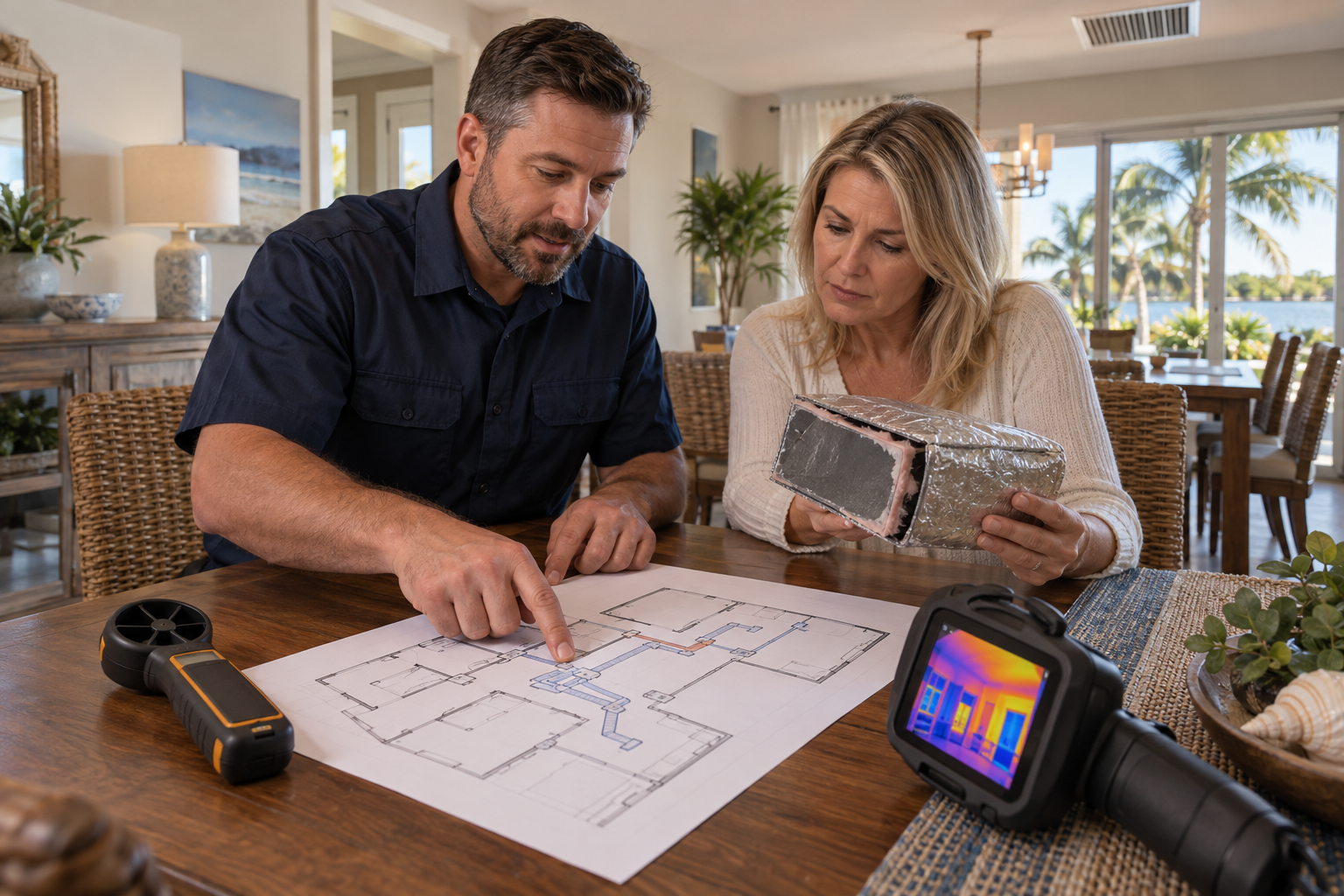
Depending on the symptoms, a technician may check electrical components, inspect coils and drainage, measure airflow, and evaluate refrigerant operation. Refrigerant readings should be interpreted alongside operating conditions and manufacturer requirements, not treated as a stand-alone verdict on system health.
Ask for a clear explanation of the confirmed problem, the proposed repair, and any remaining concerns. Knowing whether the issue is isolated or part of broader deterioration gives you a stronger basis for deciding where to invest.
Weigh System Age Against Condition and Repair History
Age provides context, but it is not an automatic replacement deadline. Many residential central air conditioners have service lives of roughly 10 to 15 years, though actual longevity varies with maintenance, installation quality, operating hours, and environmental exposure. North Port’s extended cooling season puts substantial use on equipment, and coastal exposure in parts of Sarasota and Charlotte counties can accelerate corrosion.
A well-maintained older system with a single, manageable fault may still be a reasonable repair candidate. Conversely, a newer system with repeated failures deserves a closer investigation into sizing, installation, ductwork, or maintenance problems before another repair is approved.
When Repair May Be the Practical Choice
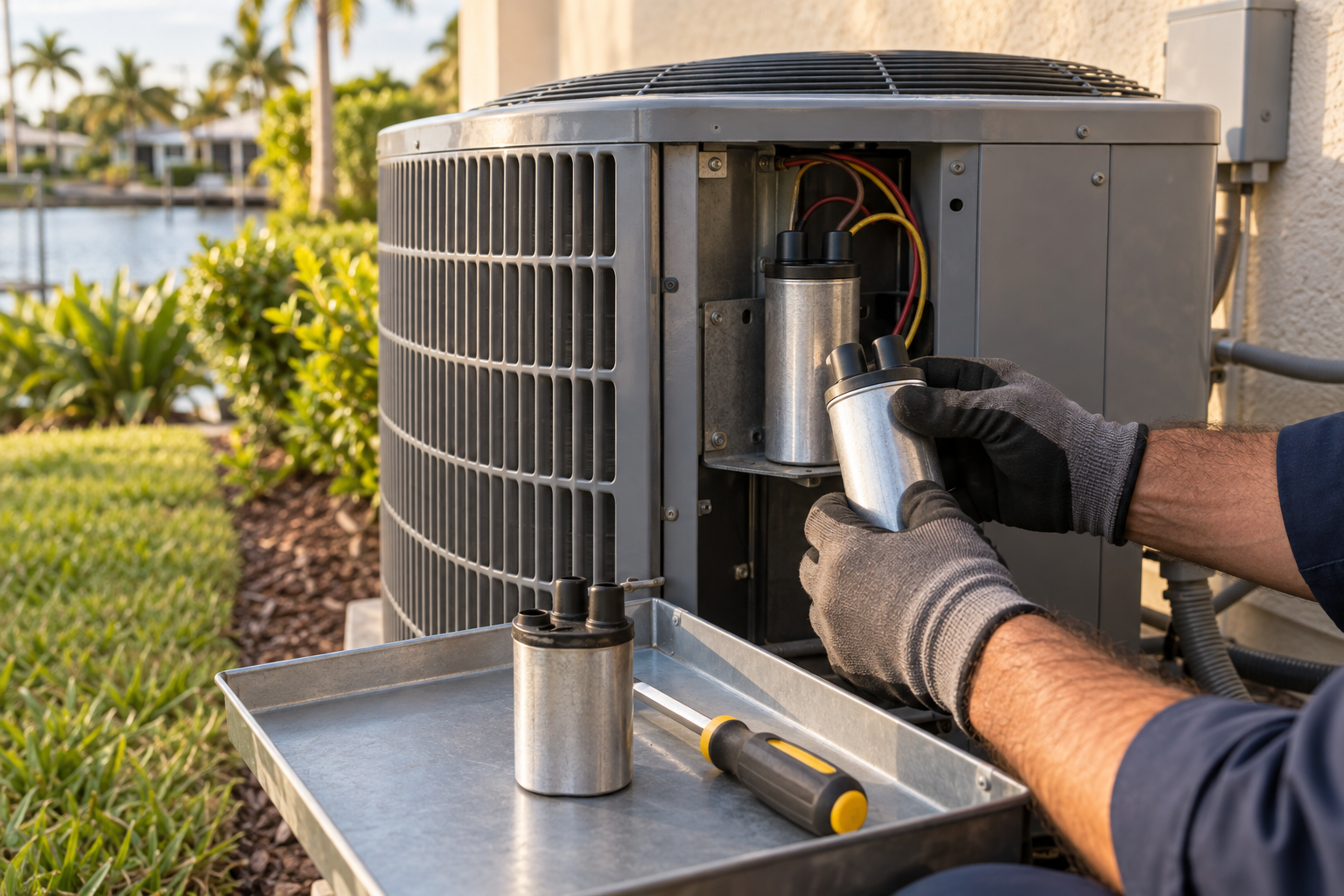
Repair often makes sense when the problem is isolated, the rest of the equipment is in sound condition, and the system has been providing consistent comfort. A failed capacitor or condensate drainage problem, for example, does not by itself justify replacing an otherwise dependable air conditioner.
Warranty coverage can also influence the decision. Check whether the failed component is covered and whether labor, diagnostic charges, refrigerant, or other materials remain your responsibility. Compare the full out-of-pocket repair cost rather than assuming a covered part means the entire service is free.
When Replacement Deserves a Closer Look
Replacement becomes more reasonable when an aging system needs a major repair and also has recurring breakdowns, significant corrosion, or persistent comfort problems. An expensive compressor failure or leaking coil should prompt a broader discussion of remaining equipment condition, available parts, warranty coverage, and likely future expenses.
Avoid relying on a rigid formula that uses only equipment age and repair price. Instead, compare a written repair estimate with a replacement proposal that identifies equipment capacity, efficiency ratings, installation scope, and any necessary duct or drainage corrections. That comparison helps distinguish a repair that preserves useful service life from one that may only postpone another costly failure.
Compare the Full Cost, Not Just the Upfront Price
A repair estimate and a replacement proposal cover different time horizons. Repair addresses the current failure, while replacement involves a larger investment intended to provide years of cooling. To compare them fairly, consider immediate expenses, likely operating costs, warranty protection, and unresolved problems that could affect either option.
For example, repairing an isolated electrical failure on a system that cools evenly and has no history of refrigerant leaks may offer good value. Replacing a deteriorating coil on an older system with compressor concerns and damaged ductwork presents a different calculation. The coil repair might restore cooling, but it would not resolve the other risks.
Understand What Each Estimate Includes
A written repair estimate should identify the work being performed, associated materials, and applicable repair warranty. If refrigerant is needed, ask whether the price includes finding and repairing the leak, rather than simply replenishing the system.
A replacement proposal should describe the matched indoor and outdoor equipment, thermostat compatibility, equipment removal, permit requirements, and installation work. It should also clarify whether electrical modifications, drain improvements, equipment supports, or duct repairs are included. A lower price may reflect a narrower scope rather than a better overall value.
Keep Energy Savings in Perspective
New equipment can reduce electricity use, especially when replacing an inefficient or deteriorated system. However, savings depend on more than the advertised efficiency rating. Thermostat settings, duct leakage, insulation, maintenance, utility rates, and installation quality all affect actual operating costs.
SEER2 measures seasonal cooling efficiency under standardized test conditions. A higher rating indicates greater rated efficiency, but it does not predict a specific monthly bill. Ask for estimated savings based on reasonable assumptions about your existing equipment and household use, and be cautious about claims that a replacement will quickly pay for itself.
Make Proper Sizing and Humidity Control Part of the Decision
In North Port, an AC replacement should address both heat removal and moisture removal. Choosing equipment based only on square footage or copying the existing unit’s capacity can repeat problems that have affected comfort for years.
A residential cooling load calculation, commonly performed using Manual J methods, considers factors such as insulation, window area, home orientation, air leakage, and building size. Those details help establish the capacity the home needs. Renovations, new windows, or insulation improvements may have changed that requirement since the previous system was installed.
Why Bigger Is Not Always Better
An oversized air conditioner can satisfy the thermostat quickly and shut off before removing enough moisture. This can leave rooms feeling cool but damp. An undersized system may struggle to maintain the desired temperature during demanding conditions. Long run times alone do not establish that a system is undersized, since properly selected equipment may run for extended periods during extreme heat.
Two-stage and variable-capacity systems can operate at reduced output under lighter loads, potentially improving temperature consistency and humidity control. Their benefits depend on correct sizing, compatible controls, appropriate airflow settings, and proper installation.
Check Ductwork Before Choosing Equipment
Ductwork must be able to distribute the required airflow without excessive restriction or leakage. In homes with ducts running through hot attics, damaged insulation and leaking connections can undermine the performance of either a repaired system or a new one.

If bedrooms stay warm while the main living area cools normally, ask whether the evaluation includes supply airflow, return-air pathways, and duct condition. Replacing equipment without correcting distribution problems may leave the same uncomfortable rooms behind.
Consider Refrigerant Type, Parts Availability, and Warranty Coverage
The refrigerant used by your existing AC can affect repair costs and long-term planning. Older R-22 systems may be expensive to repair because new production and import of R-22 for servicing ended in the United States, although reclaimed supplies remain available.
R-410A equipment can still be serviced, and the transition to newer refrigerants does not automatically require homeowners to replace working systems. Newer residential equipment increasingly uses lower-global-warming-potential refrigerants such as R-32 or R-454B.
Ask About Repair Timing and Coverage Details
Parts availability matters during Southwest Florida’s long cooling season. A covered component may still take time to obtain, and a repair that leaves the home without cooling for an extended period may require additional planning.
For new equipment, review the manufacturer’s parts warranty separately from the contractor’s labor warranty. Confirm any registration deadlines, maintenance requirements, exclusions, and transfer provisions. Keeping installation records and maintenance documentation makes future warranty questions easier to resolve.
Evaluate Installation Quality Before Approving Replacement
Even well-rated equipment can perform poorly if installation details are overlooked. For homeowners in Venice, Port Charlotte, Englewood, and Punta Gorda, the same priorities apply as in North Port: correct airflow, reliable drainage, sound electrical connections, and equipment installed according to manufacturer instructions and applicable local requirements.

A replacement should include appropriate startup checks, not just confirmation that cold air comes from the vents. Depending on the equipment, commissioning may involve checking airflow and static pressure, verifying refrigerant charge using manufacturer procedures, testing controls, and confirming that condensate drains properly.
Clarify Drainage and Equipment Protection
Heavy cooling use produces substantial condensate, so drain configuration and overflow protection deserve attention. Ask how the installation addresses drain access, required safety devices, and any history of water backing up around the indoor equipment.
The outdoor unit also needs suitable support, secure attachment where required, and clearances that allow airflow and service access. Coastal exposure may warrant discussion of manufacturer-approved corrosion protection and maintenance practices, but no treatment makes equipment immune to salt-related deterioration.
Request a Clear Handoff After Installation
Before the installation is considered finished, have the thermostat settings, filter location, maintenance needs, and warranty paperwork explained. If the system has humidity settings or variable-capacity controls, learn how to use them without unintentionally limiting performance.
Keep a copy of the equipment model numbers, installation scope, and startup records. Those details provide a useful baseline for future maintenance and help confirm whether the replacement is delivering the comfort improvements that informed your decision.
Unsure whether a repair or replacement makes sense for your North Port home’s AC?
Contact Foundation Air for help evaluating your system and understanding your options.